Arriving in the Cayman Islands brings an immediate sense of tranquillity, but for many travellers, the real adventure begins when they pick up the keys to their rental vehicle. Driving on the islands unlocks a level of freedom that structured tours simply cannot match, granting you uncompromised access to remote gems like Rum Point and Starfish Point.
While global fuel prices have experienced a notable increase, renting a car remains an incredibly practical and financially sound decision for your Caribbean getaway. Relying strictly on private taxis for long-distance, cross-island journeys will rapidly exceed the daily cost of a rental car and its corresponding fuel consumption. This guide provides everything you need to know about how to fuel up in the Cayman Islands.
Before you fuel up and drive along the Queen's Highway, you should confirm your vehicle’s precise fuel requirements. Most cars in rental fleets operate on standard unleaded petrol, but it is always advisable to double-check. Additionally, take a brief moment to look at the dashboard instrument cluster to locate the fuel door indicator arrow, saving you the minor embarrassment of pulling up to an island filling station on the wrong side of the pump.
One of the most important things that you should understand is the volume of measurement used at the pump. The Cayman Islands measure fuel using the Imperial gallon system, rather than the US gallon or the litre, which can confuse tourists. It is essential to remember that one Imperial gallon is roughly equivalent to 1.2 US gallons, or approximately 4.55 litres. Because an Imperial gallon is roughly 20% larger than its counterpart, the price per unit shown on the electronic signage reflects a significantly larger volume of fuel.
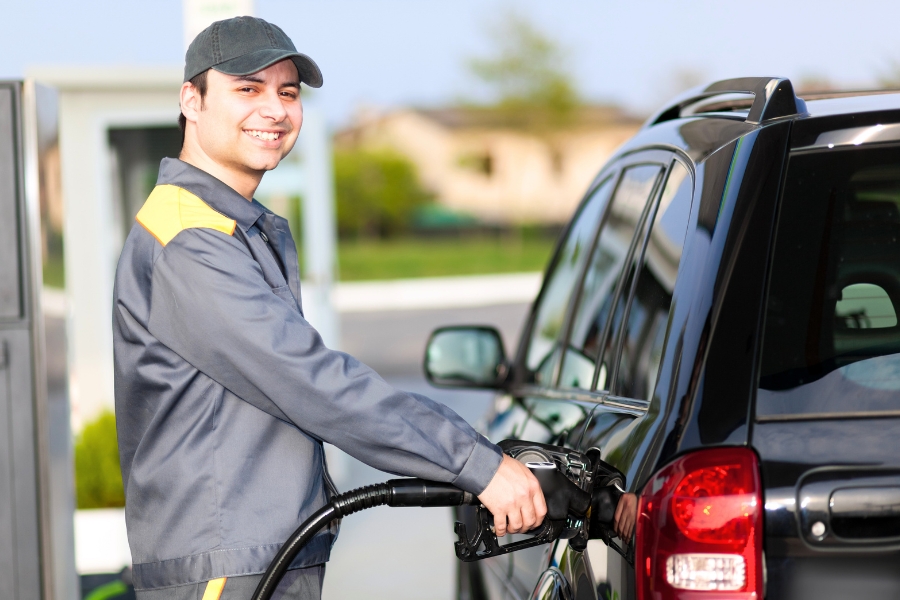
When you pull into a gas station to fuel up in the Cayman Islands, you will immediately notice the full-service treatment during daytime hours. Local stations employ friendly attendants who will greet you at your window, handle the pumping process, and even offer to clean your windscreen. For drivers navigating the islands late at night or visiting unstaffed pumps, self-service options are also available. In these scenarios, you simply note your pump number, walk inside to pre-pay the cashier, return to the island to dispense your fuel, and collect any remaining change from the counter once finished.
When you pull into a gas station to fuel up in the Cayman Islands, simply follow these steps to ensure a smooth transaction.
Pull up to the pump on the appropriate side for your vehicle's fuel door and switch off the engine.
During daytime hours, a station attendant will typically approach your window to assist you.
Inform the attendant of your needs, such as "Fill the tank with 89 regular, please" or specifying a fixed dollar amount.
If paying by card, the attendant may bring a wireless terminal to your window, or you can proceed to the kiosk.
For late-night visits or unstaffed pumps, note your pump number, walk inside to pay at the cashier, return to the island to dispense your fuel, and collect any remaining change from the counter.

Gas stations across the islands operate in a dual-currency system. The official legal tender is the Cayman Islands Dollar (KYD), but the United States Dollar (USD) is universally accepted at every retail establishment, commercial business, and gas station on the islands. This setup means you do not need to rush to a currency exchange kiosk upon arrival, as you can seamlessly conduct transactions using either currency.
Local stations accept both cash and card payments. For those who prefer to use a major credit or debit card in full-service lanes, the attendant will bring a wireless handheld payment terminal directly to your window, allowing you to complete the transaction safely and securely without ever leaving the comfort of your vehicle. It is always vital to ensure your issuing bank is aware of your travel plans to prevent any temporary fraud blocks while transacting on the island.
Tipping etiquette at local gas stations is another common source of confusion for tourists. While tipping the gas station attendants is not legally mandatory or aggressively solicited, it is highly appreciated within the local service culture. If an attendant thoroughly cleans your front and rear windscreens, checks your tyre pressure, or delivers exceptionally warm, helpful island hospitality, handing them a small gratuity of one or two dollars is considered a polite and respectful gesture. This small kindness goes a long way and reflects the gentle, welcoming social norms that define everyday life in the community.

Fill the Tank in Urban Areas: The local regulation office consistently reports that fuel prices are lower in urban hubs. To get the most value for your money, plan to fill up your tank within the highly competitive boundaries of George Town and West Bay.
Refuel Before Heading East: Gas stations are densely concentrated around the capital, but become notably scarce as you travel toward the outer coastal districts. Ensuring your tank is full before embarking on an all-day excursion prevents you from having to pay higher premium rates at remote, isolated stations.
Comply with the Fuel Policy: Rental agencies usually enforce strict fuel policies that require vehicles to be returned with a full tank or the same amount of fuel they had at pickup. If you fail to top up the tank yourself, the agency will levy heavy refuelling charges and administrative fees that far exceed standard fuel prices.
Keep Your Windows Closed: The flat geography of the islands eliminates steep uphill climbs, but driving with open windows at higher speeds creates massive wind resistance. Keeping your windows rolled up while cruising along the highways allows the vehicle to cut through the air efficiently and stretch your fuel further.
Park Beneath Natural Shade: The intense tropical heat forces air conditioning systems to work overtime, which drastically accelerates your fuel consumption. Parking beneath local palms or shaded structures keeps the cabin cool and reduces the engine power required to lower the interior temperature when you return.
Are gas stations usually open 24 hours on the islands? While many major gas stations near the airport and in heavily populated areas like George Town operate 24/7, remote districts close earlier in the evening. It is always best to fill up your tank before sunset if you plan to explore the quieter areas of the island.
Can I pay for my fuel using both cash and credit cards? Yes, local gas stations feature modern point-of-sale systems that can easily split a single transaction across different payment methods. Simply inform the station attendant before they begin processing your payment so they can input the specific amounts into their terminal.
Is fuel cheaper at self-service pumps than in full-service ones? The price difference between self-service and full-service pumps at most local stations is practically non-existent. Because the full-service model is deeply integrated into the island's economy, stations rarely levy a premium price.
What should I do if I accidentally put the wrong fuel in my car? If you mistakenly put diesel into your petrol-powered rental vehicle, do not turn the key in the ignition or start the engine under any circumstances. Leave the car exactly where it is and call your rental agency to arrange for a tow truck and a mechanical flush.
Navigating the roads and learning how to fuel up in the Cayman Islands is a straightforward process that requires basic preparation and geographical awareness. By taking the time to understand the unique characteristics of the local gas stations and driving culture, you can easily eliminate any potential stress or unexpected expense. The fuel costs and minor efforts required at the pump are a very small trade-off for the freedom that a rental car provides.
Do not let the global fuel crisis limit the scope of your upcoming Caribbean adventure. The true magic of these islands reveals itself when you venture past the resort swimming pools and discover the quiet coastal coves, historical architecture, and delicious culinary gems tucked away in the outer districts. Book your car on Final Rentals today, and prepare for the ultimate tropical road trip in the Cayman Islands.